


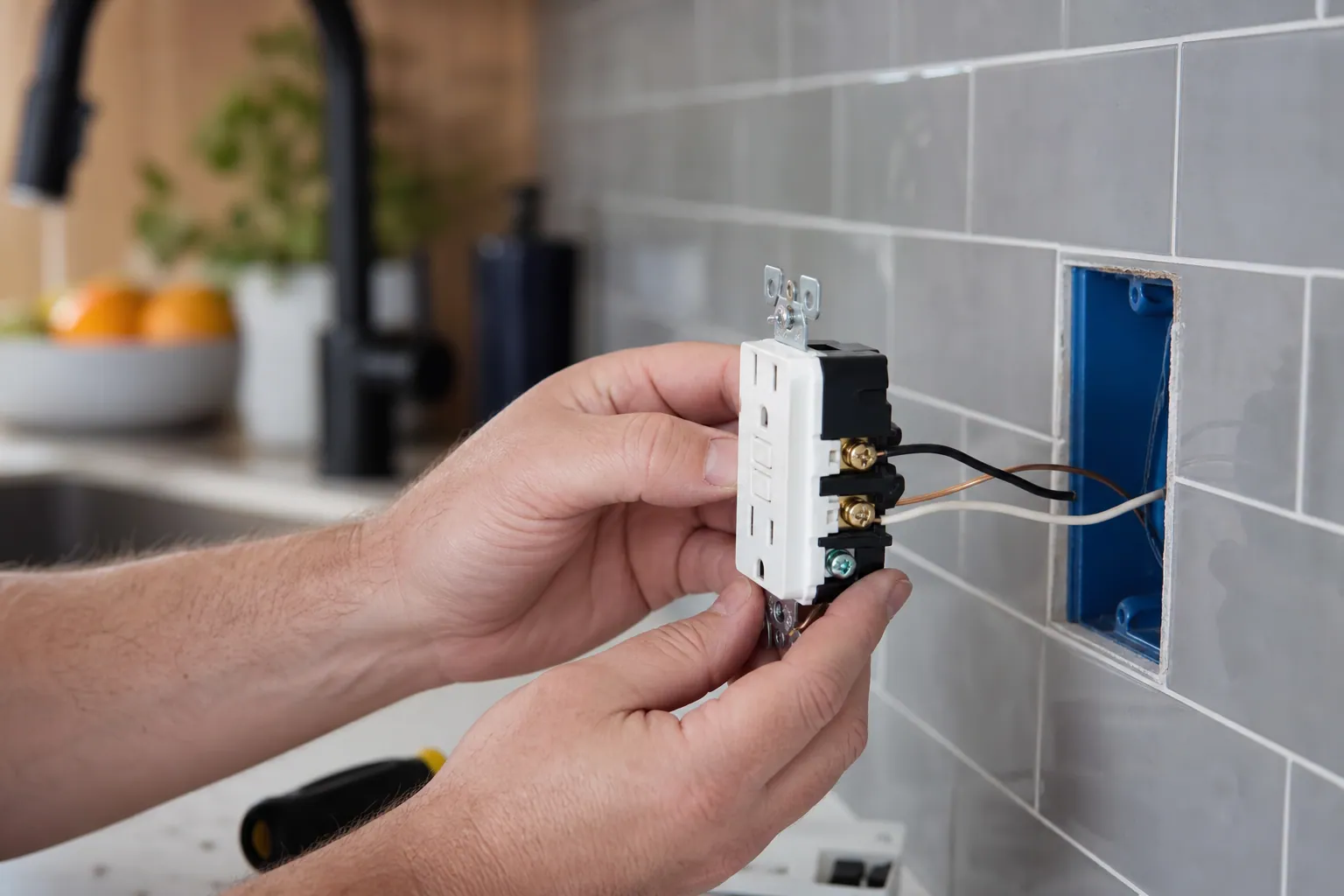
A GFCI — ground-fault circuit interrupter — is that outlet with the TEST and RESET buttons you see in every bathroom built in the last few decades. Its one job is to notice when electricity is leaking somewhere it shouldn't, like through water or through a person, and shut things down before the leak becomes an injury. A standard breaker won't do that; breakers protect wiring, GFCIs protect people.
Below is how the device actually works, where the National Electrical Code (NEC) requires one, how to test it, how it differs from an AFCI, and what it costs to add them to an older home in 2026. None of this is complicated, and most of it you can check yourself this weekend.
A GFCI constantly compares the current flowing out on the hot wire with the current returning on the neutral. In a healthy circuit those two numbers match exactly. When they differ by as little as 4 to 6 milliamps, the device concludes that current is escaping through an unintended path — a wet countertop, a corroded tool casing, you — and opens the circuit in roughly 1/40 of a second.
That sensitivity is the whole point. A standard 15-amp breaker only trips on overloads and short circuits; it will pass a dangerous current through a human body without complaint, because to the breaker that's just a small load. The GFCI reacts at a level thousands of times lower, fast enough to stop a shock before muscles lock up.
NEC 210.8 lists the locations, and they follow one rule of thumb: anywhere electricity and water can meet. For homes, the current code requires GFCI protection at:
If your house predates these rules, you're not required to upgrade until you renovate or replace a device — existing installations are grandfathered. The hazard isn't grandfathered, though, which is why wet-location retrofits are worth doing on their own.
Press TEST. You should hear a firm click, and anything plugged in goes dead. Press RESET and power comes back. If it won't trip, won't reset, or resets without a click, the internal mechanism has failed and the outlet needs replacing — a worn GFCI can keep passing power while providing zero protection.
GFCIs are electronics, and they wear out: figure a 10-to-15-year service life, less in humid climates or lightning-prone areas. Units built to the UL 943 standard since 2015 self-test automatically and flash an indicator when they fail, but the button test is still the only check you fully control.
A GFCI prevents shocks by watching for current leaking out of the circuit. An AFCI — arc-fault circuit interrupter — prevents fires by listening for the electrical signature of arcing: a loose terminal, a nail through a cable, a cord crushed under a couch leg.
The NEC now requires AFCI protection in most living areas — bedrooms, living rooms, hallways — while GFCI covers the wet locations above. Some rooms, like kitchens and laundry areas, effectively need both, which is why dual-function breakers (about $45–70 each for the part in 2026) have become the standard answer in new panels.
You don't need to rewire anything to add GFCI protection to an older home. There are three routes, roughly cheapest first:
Older two-prong homes get a bonus: NEC 406.4(D) allows you to replace ungrounded outlets with GFCI receptacles labeled "No Equipment Ground," which delivers real shock protection without the cost of rewiring. Swapping a like-for-like receptacle is within reach of a careful DIYer, but anything involving the panel, aluminum wiring, or circuits that don't behave the way their labels claim belongs with a licensed electrician — that's routine work for a shop like Acme Electric.
Walk your house and count the unprotected outlets in the kitchen, baths, garage, and outside. For a typical older home that's five to eight locations, and protecting all of them usually lands between $400 and $900 — less if a couple of breakers can cover whole circuits.
Then set a recurring reminder for the first of the month and press the TEST button. It's the cheapest electrical safety habit there is.