


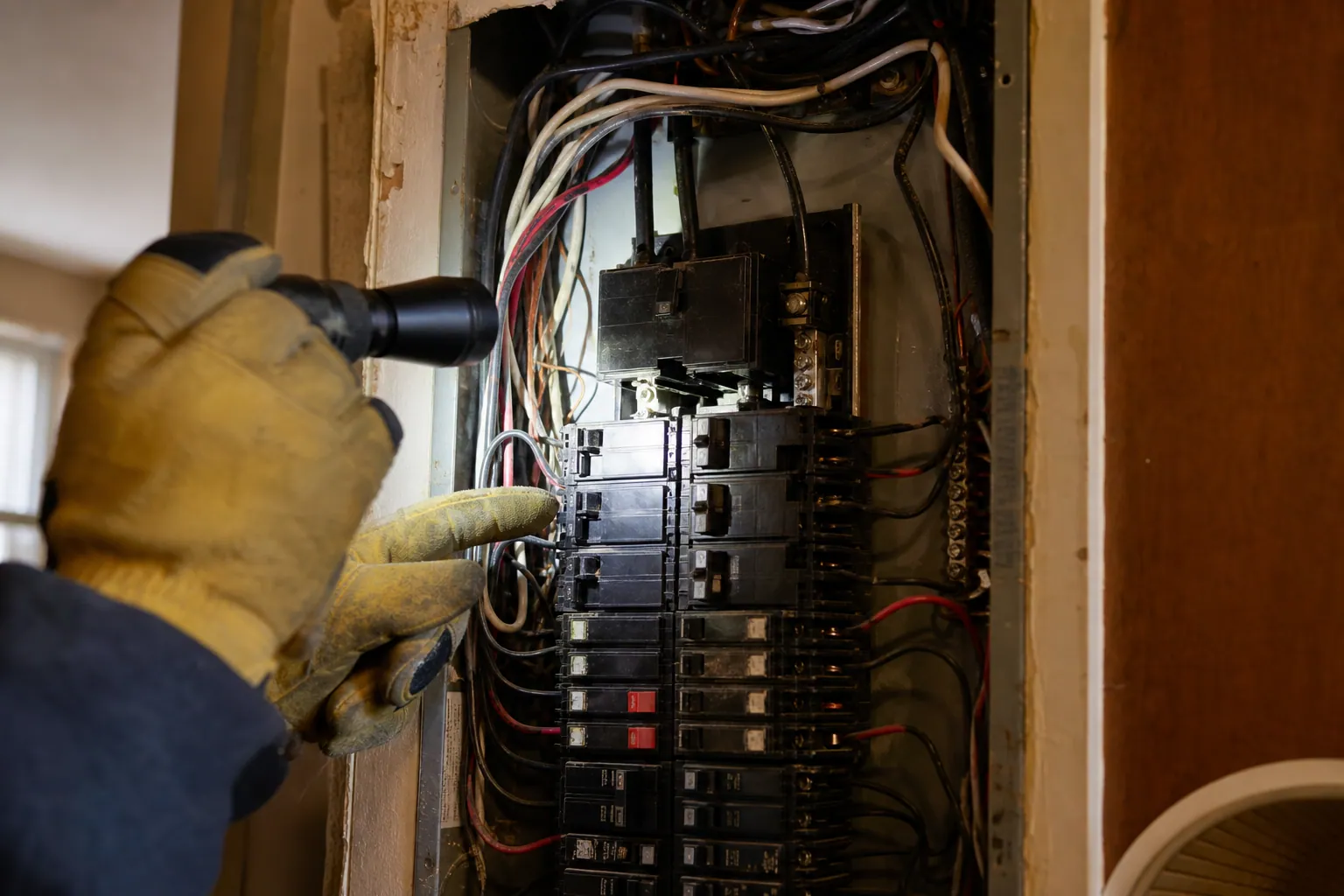
Your electrical panel is the distribution hub for every circuit in the house, and most people never look at it until something stops working. That's usually fine — a healthy panel needs zero attention. But panels age, and modern houses pile on loads the original installer never imagined: EV chargers, heat pumps, induction ranges, a hot tub on the deck.
Below are the seven signs a panel is due for replacement, ordered roughly from plan-ahead to deal-with-this-soon. None of them mean your house is about to burn down. They mean the panel is at the end of its useful life — and it's a lot cheaper to upgrade on your own schedule than in the middle of an outage.
If your panel has screw-in fuses instead of breakers, it almost certainly predates the mid-1960s. Fuses themselves work fine — the problem is everything around them. The box wasn't sized for modern loads, there's no spare capacity, and it's common to find a blowing fuse "fixed" by a past owner who screwed in a bigger one, quietly overloading the wire. Many insurers also surcharge or decline homes with fuse panels.
As for capacity: NEC 230.79(C) sets 100 amps as the minimum service for a dwelling — a floor, not a recommendation. A gas-heated house with modest appliances can live on 100 amps just fine. Add a 40-amp EV charger, a heat pump, or an induction range, and the math stops working. Two hundred amps is today's standard and the usual upgrade target.
A panel cover should be room temperature and near silent. Heat you can feel with a flat palm, a buzz you can hear from a few feet away, or a burnt or fishy smell all point to a loose or arcing connection — electricity turning into heat somewhere it shouldn't.
This is the one item on the list that isn't a plan-ahead sign. The bus bars behind the cover stay live even with the main breaker off, so diagnosing this belongs to a licensed electrician — it's exactly the kind of call an outfit like Acme Electric runs every week. While you're near the panel, check the brand label: Federal Pacific Stab-Lok and Zinsco panels have documented failure histories, and most electricians recommend replacing them on sight.
Lights that dim every time the A/C compressor or microwave kicks on point to voltage drop under load. One flickering fixture is a fixture problem; house-wide dimming is a capacity or connection problem, sometimes a loose neutral at the panel.
A breaker that trips once in a while is doing its job. The same breaker tripping every week means the circuit is overloaded or the breaker itself is worn out — they're mechanical devices, and they do wear. If resetting breakers is part of your household routine, the panel is telling you it's undersized for how you actually live.
Houses wired between about 1965 and 1973 often have aluminum branch circuits. Aluminum expands and contracts more than copper, so terminations loosen over the decades. One clarification: the fat aluminum service-entrance cable feeding your meter is standard and fine — it's the 15- and 20-amp branch circuits that need attention, and a panel upgrade is the natural moment to address them with AlumiConn or COPALUM connectors.
Finally, open the panel door and count empty slots. If every space is full — or someone has already doubled circuits up on tandem breakers — you have no room to grow. A finished basement, a kitchen remodel, or an EV charger all need new circuits, and a full panel means the upgrade comes first.
A proper upgrade starts with a permit and coordination with your utility to disconnect power at the meter. Plan on four to eight hours without electricity while the electrician mounts the new panel, re-terminates every circuit, and labels each one accurately — often for the first time in the house's life.
Current code brings a few extras along for the ride. NEC 230.67 requires whole-house surge protection on new and replaced services, and grounding usually gets brought up to standard: two ground rods plus bonding to the water and gas lines. A municipal inspector signs off before the utility reconnects.
A straight swap is a one-day job. If the service-entrance cable, mast, or meter base needs replacing too, plan on two.
Prices swing with region, panel location, and how much of the service equipment comes along for replacement. Typical US ranges right now:
Get two or three written quotes and make sure each one includes the permit and inspection — a bid without them isn't a discount, it's a corner being cut. A new 200-amp panel is a 30-to-40-year asset. Spread over its life, it's one of the cheapest major systems in the house — and it's the one everything else plugs into.